NutriFuel - AI-assisted Meal Planning for Clinical Nutritionists
Designed an enterprise meal planning workflow that helped nutritionists create personalized weekly meal plans faster while balancing clinical goals, dietary restrictions, allergies, and patient preferences.

Client:
AssureCare Healthtech
Category:
Enterprise SaaS • Healthcare • Nutrition Management
My Role:
Lead Product Designer Product Strategy • UX Research • Information Architecture • Interaction Design • Design System • Prototyping
Introduction
Meal planning is one of the most time-intensive workflows for clinical nutritionists. Every recommendation must balance nutritional goals, chronic conditions, allergies, food preferences, and patient lifestyle while remaining practical enough for long-term adherence.
While working at AssureCare, I led the design of the MVP for NutriFuel’s Meal Planning experience (now part of NutraVance™). The objective was to transform a repetitive, manual workflow into an intuitive experience that enabled clinicians to create personalized weekly meal plans in minutes instead of rebuilding plans from scratch.
From Whiteboard to Product Strategy
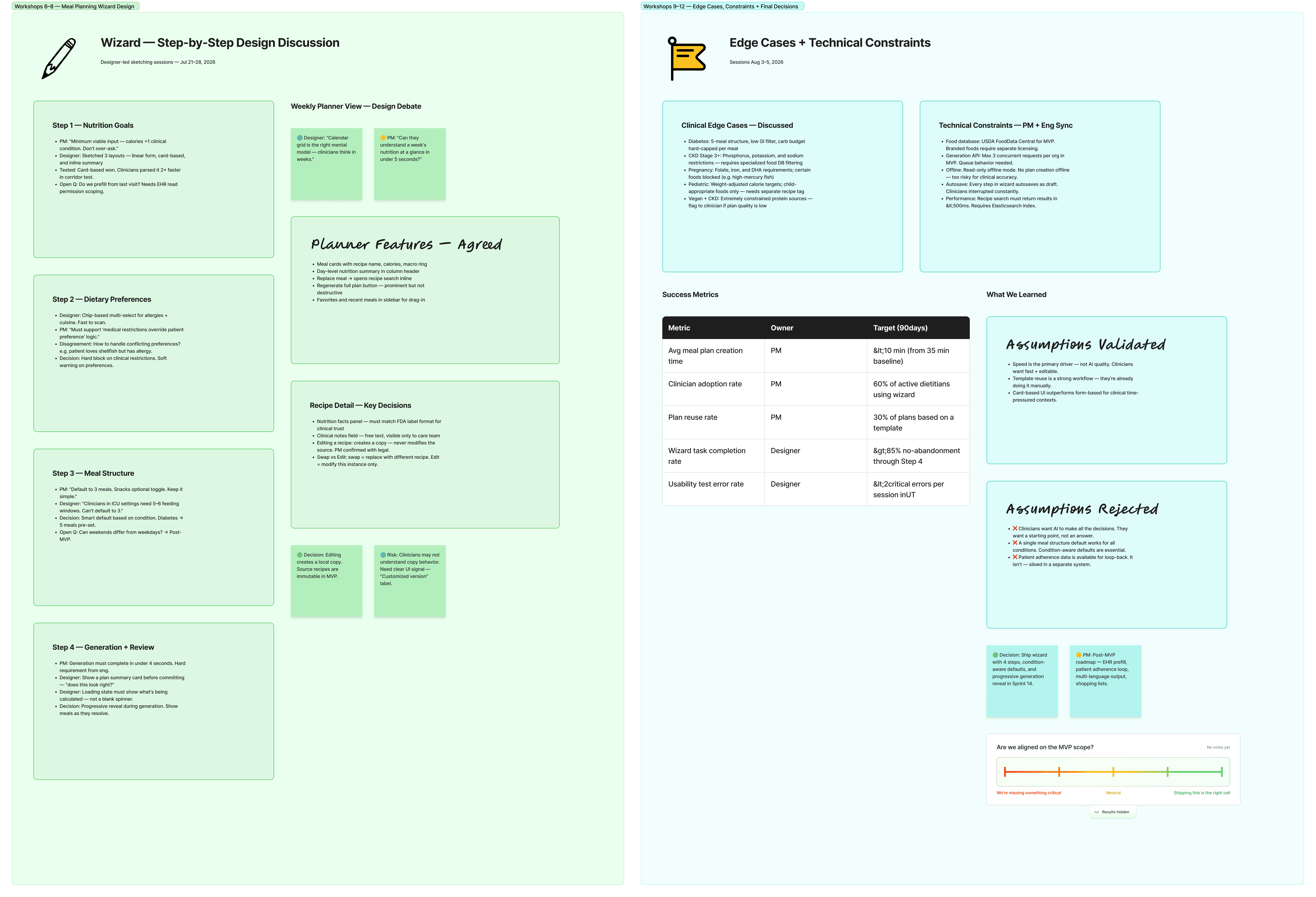
Every feature started with workshops, research, and rapid iteration—not screens.
The project began with collaborative discovery sessions between Product Management and Design. Together we mapped the clinical workflow, identified pain points in existing meal planning processes, and defined the minimum viable feature set.
The workshops focused on answering three fundamental questions:
• What information does a nutritionist need before creating a meal plan?
• Which decisions should remain under clinician control?
• Which repetitive tasks could be automated without compromising clinical accuracy?
These sessions evolved into user journeys, feature prioritization exercises, information architecture, and workflow diagrams that guided the product through development.
Solution
We redesigned meal planning as a guided, clinician-first workflow that transformed a complex manual process into a structured experience. Instead of building meal plans from scratch, nutritionists were guided through four simple steps to define nutrition goals, dietary preferences, meal structure, and generation rules. Patient context, allergies, medical conditions, and food preferences were automatically incorporated throughout the experience.
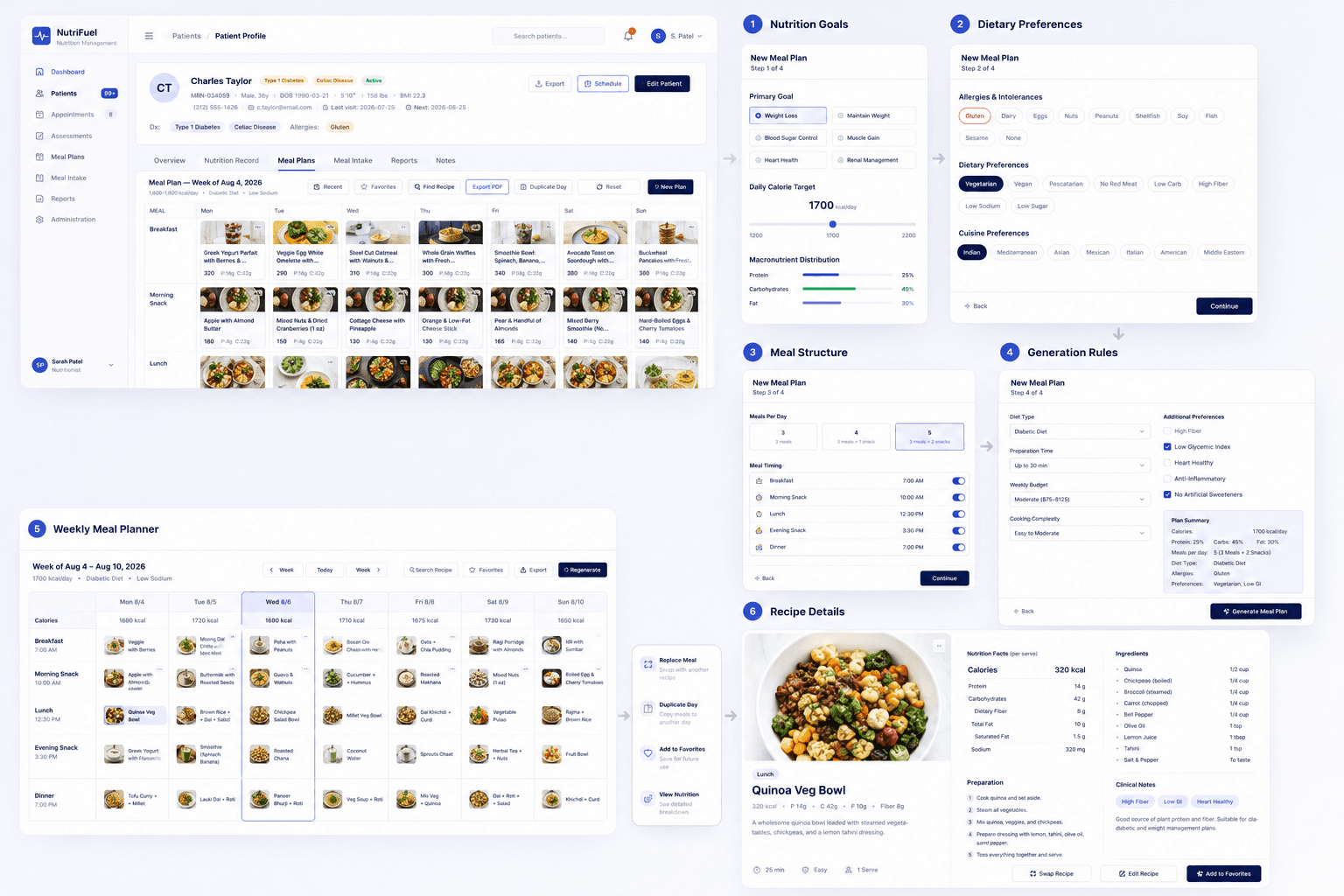
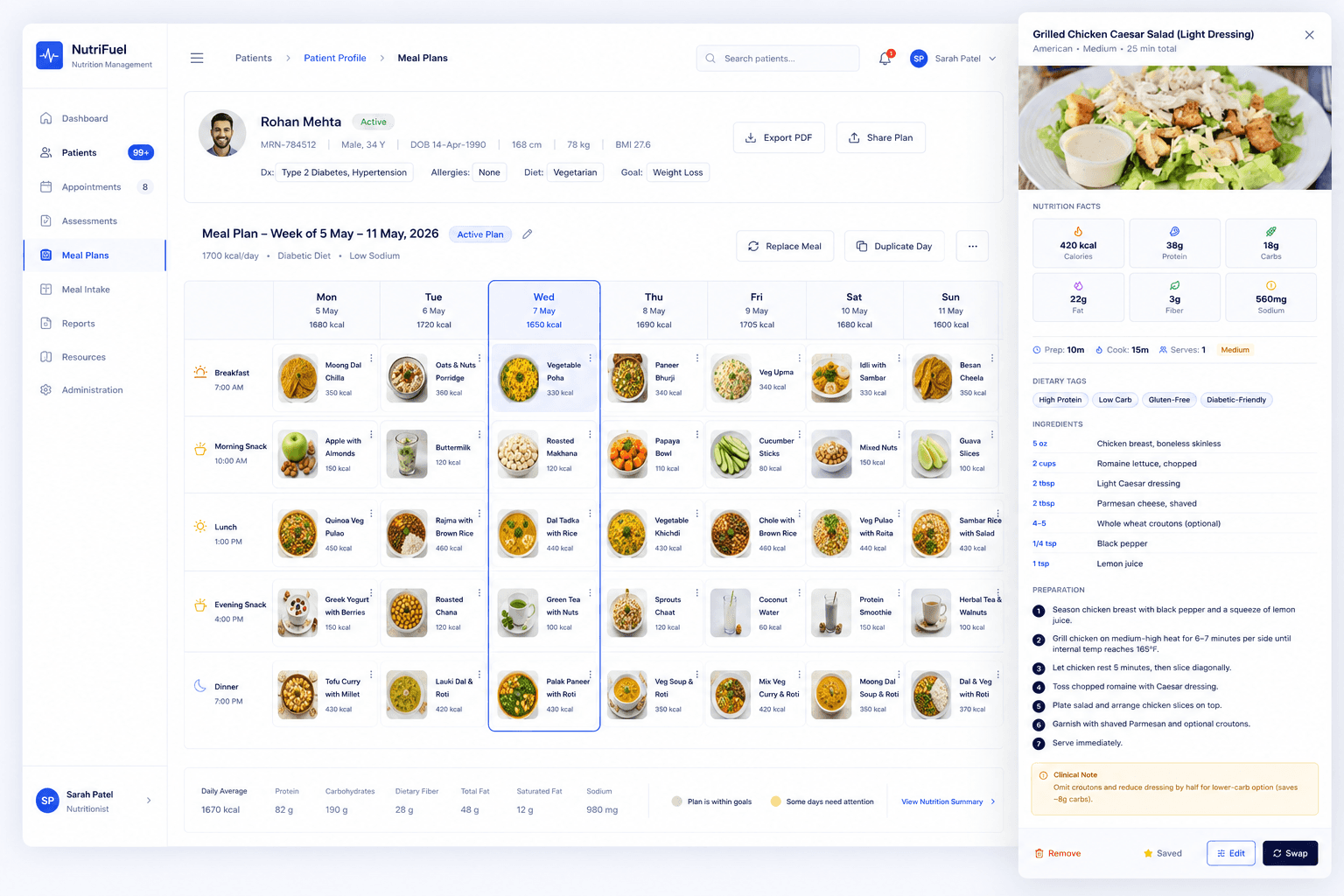
The generated weekly meal plan remained fully editable, allowing clinicians to replace meals, duplicate days, regenerate recommendations, reuse favourite recipes, and customise every recommendation while maintaining complete clinical control.
Related Projects

