From Authentication to Enterprise Enablement
Unlocking Enterprise Growth Through Self-Service Enterprise Authentication
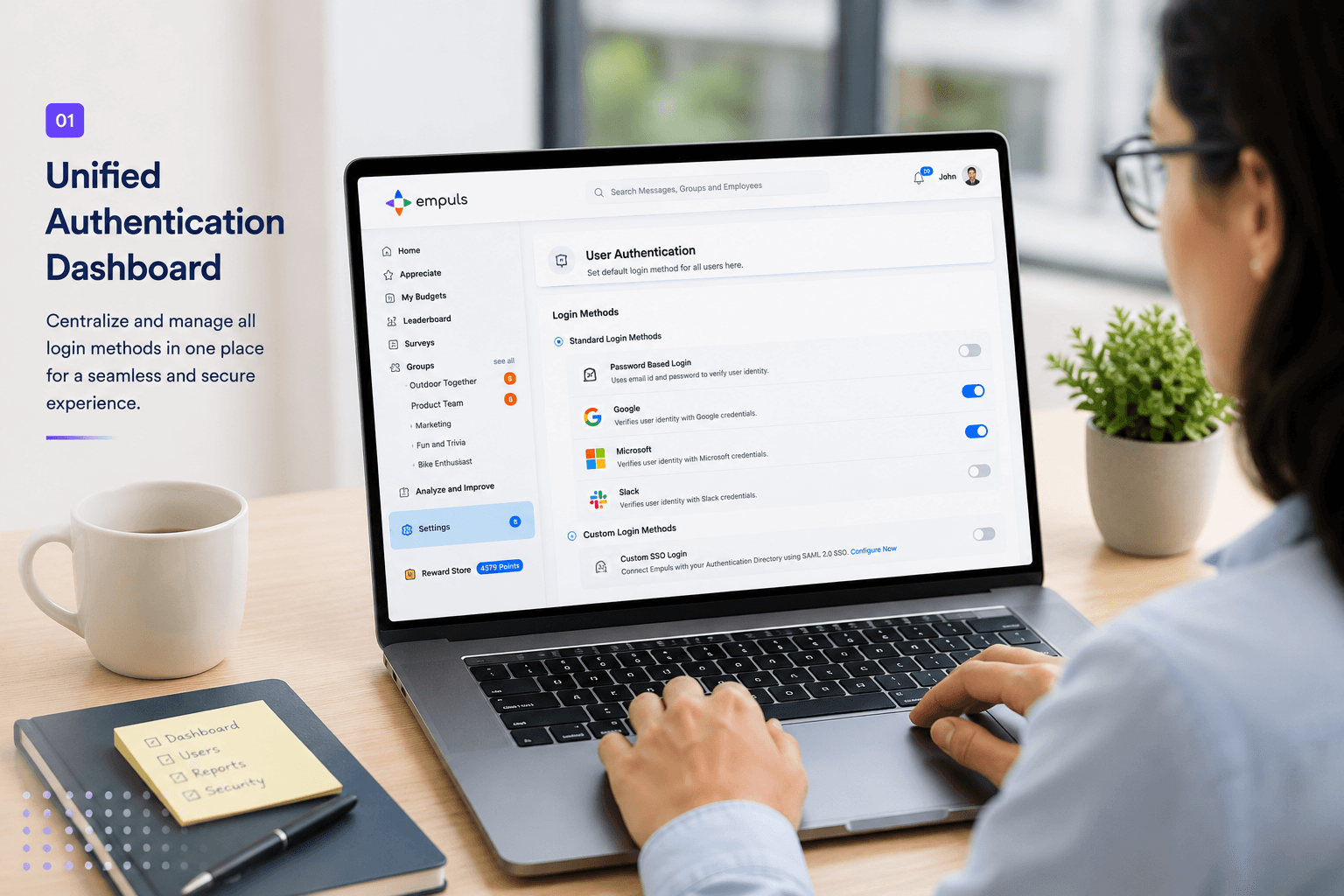
Client:
Enterprise Employee Engagement SaaS
Category:
Enterprise SAAS, Auth UX
My Role:
Lead Product Designer
Unlocking Enterprise Growth
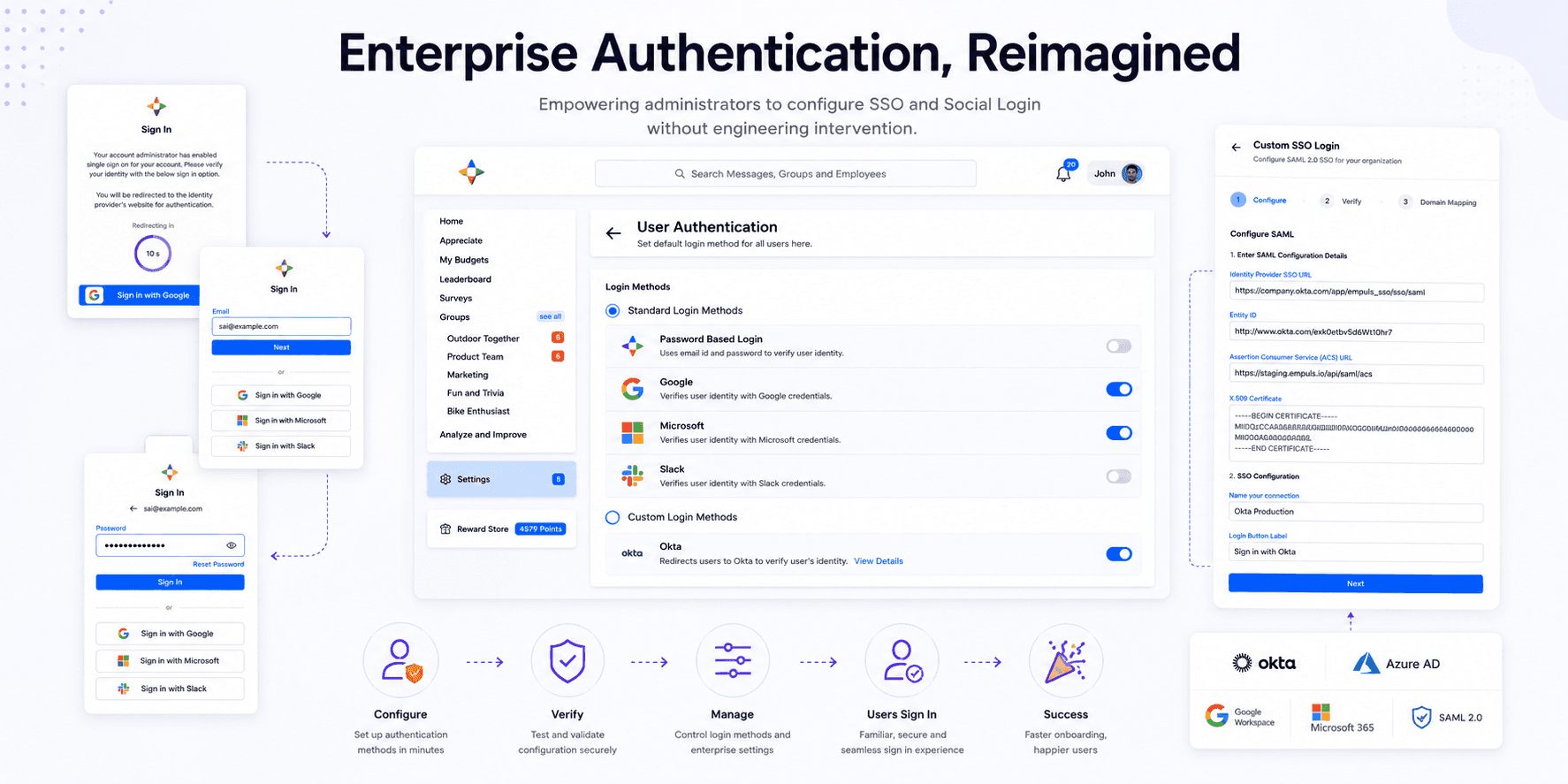
As our product expanded from serving SMBs to large enterprise organizations, authentication evolved from a technical capability into a strategic business requirement.
Enterprise customers expected employees to authenticate using their existing corporate identity providers instead of managing separate usernames and passwords. During procurement, IT and Security teams consistently evaluated authentication capabilities as part of their technical assessment.
Although our platform already supported enterprise authentication providers, every implementation required backend configuration by engineering. Authentication was no longer a product feature—it had become an operational service.
To support enterprise growth, we needed to transform authentication into a scalable, self-service capability.
Why This Initiative Was Prioritized
This wasn’t simply about adding Google Login or SSO.
It was about removing one of the biggest friction points in enterprise adoption.
Enterprise Sales Were Slowing
Authentication discussions appeared in almost every enterprise sales cycle.
Large organizations wanted to know:
Can employees sign in using Microsoft 365?
Does it support Google Workspace?
Can we integrate with Okta?
Do you support Azure AD?
Can we configure SAML?
The answer was always yes.
But implementation required engineering support.
This increased procurement time and delayed onboarding.
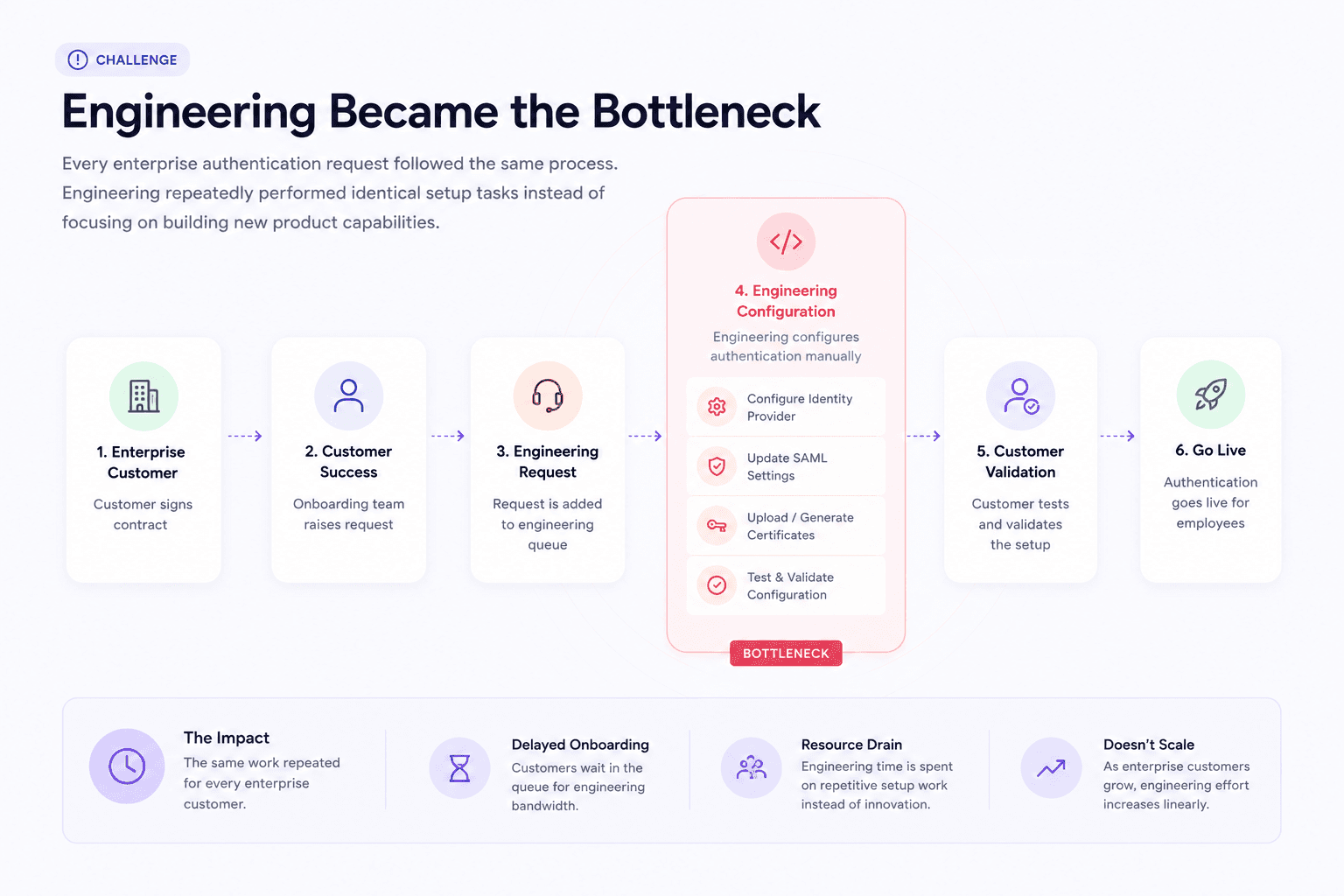
Customer Success Couldn’t Configure Authentication
Customer Success teams depended on Engineering for even small authentication changes.
This slowed onboarding, increased coordination, and delayed customer activation.
Business Opportunity
Instead of continuing to configure authentication manually for every customer, we identified an opportunity to transform authentication into a product capability.
By giving administrators control over authentication settings, we could:
Reduce engineering dependency
Accelerate enterprise onboarding
Improve enterprise readiness
Lower operational costs
Build a scalable authentication framework
The Problem
Although enterprise authentication integrations already existed, administrators couldn’t configure them.
Every request required backend intervention.
This created several challenges.
For Customers
Longer implementation time
Delayed employee onboarding
Additional IT coordination
For Customer Success
Engineering dependency
Manual implementation tracking
For Engineering
Repetitive implementation work
Reduced bandwidth for innovation
For Business
Slower enterprise adoption
Longer sales cycles
Higher onboarding costs
Design Challenge
How might we enable enterprise administrators to independently configure secure authentication while supporting both simple social logins and complex enterprise identity providers without increasing implementation complexity?
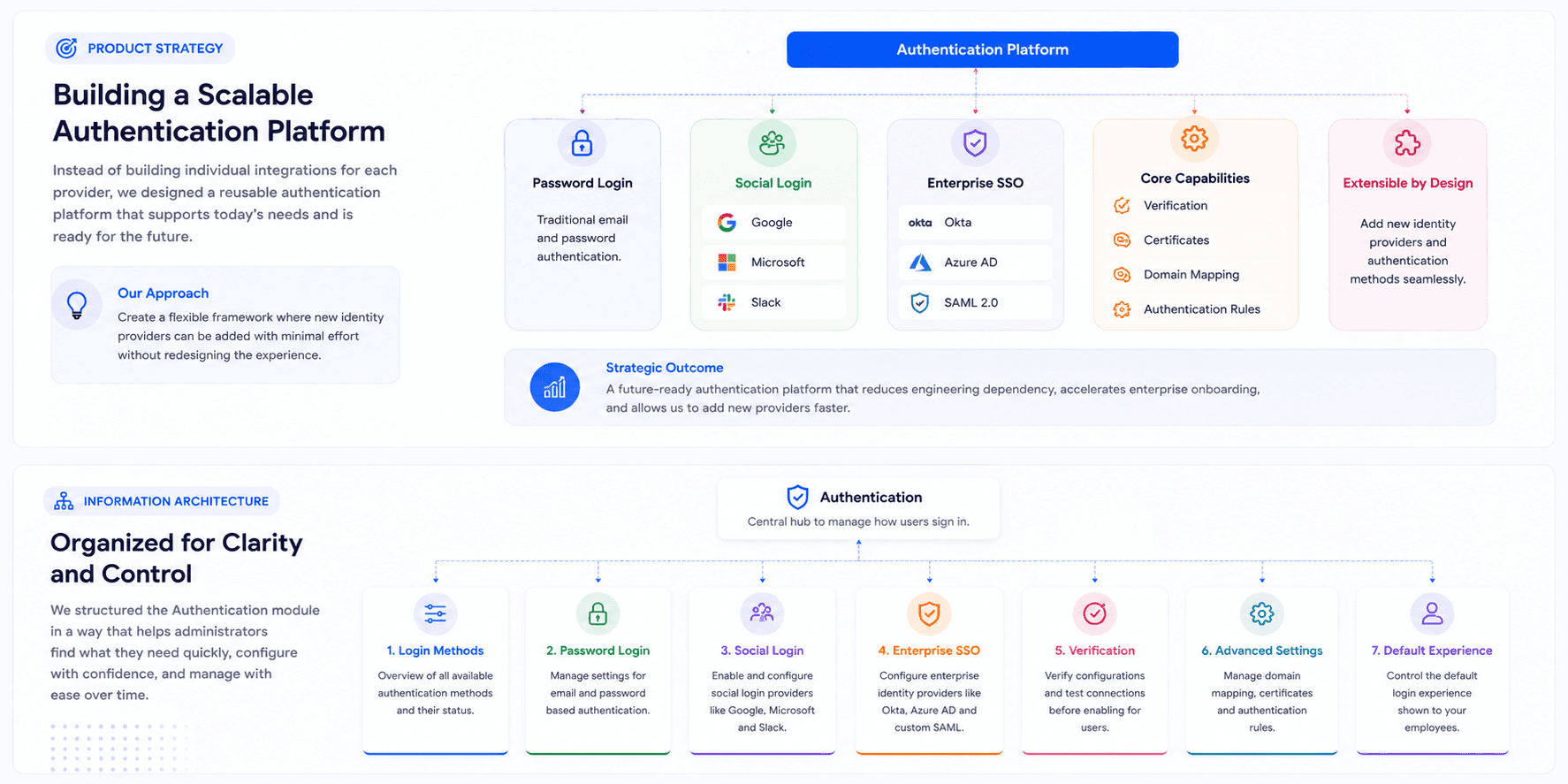
Solution
1. Unified Authentication Dashboard
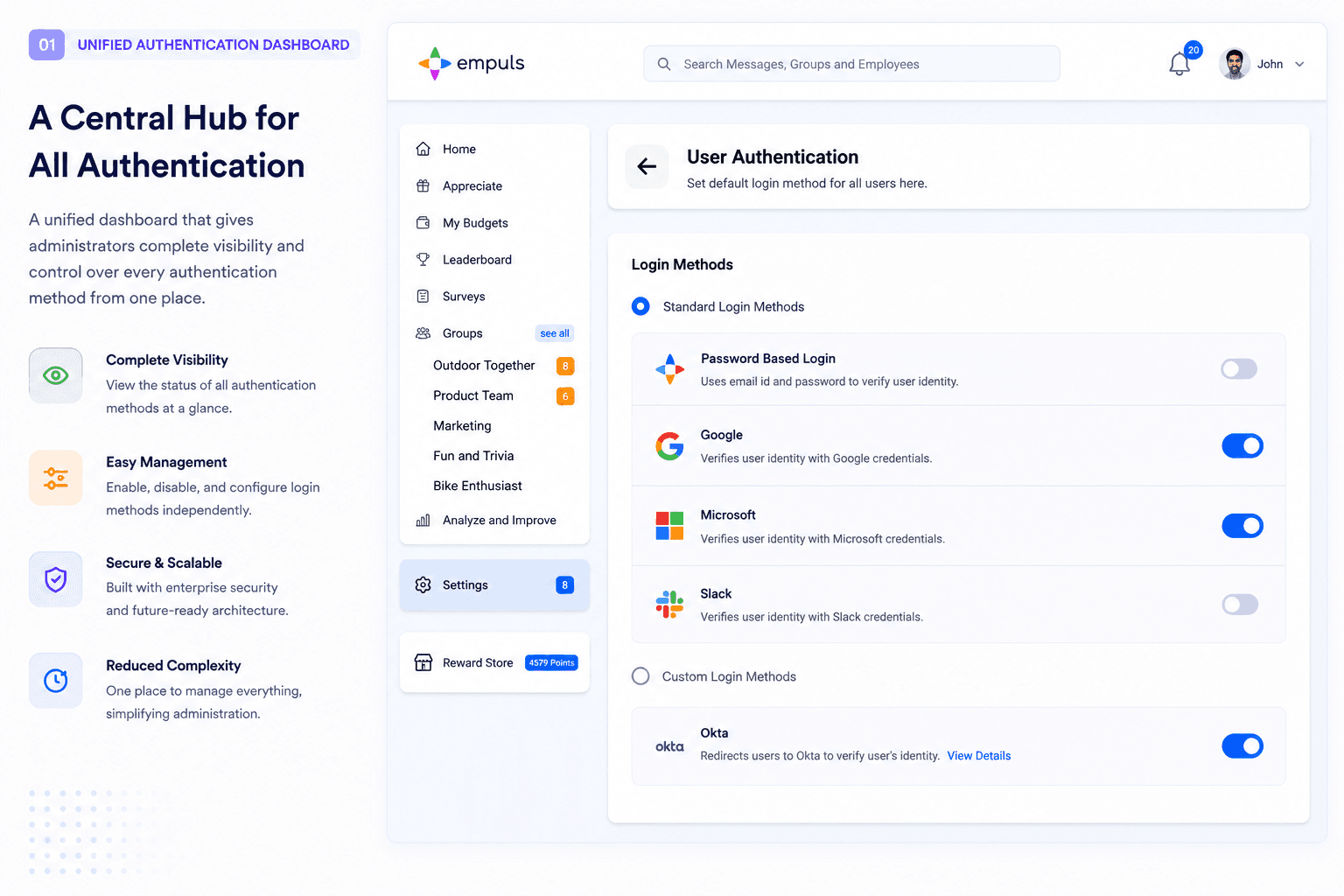
A centralised dashboard allows administrators to manage every authentication method from one place.
Benefits
Single management experience
Authentication status visibility
Clear provider management
Reduced configuration complexity
2. Flexible Login Methods
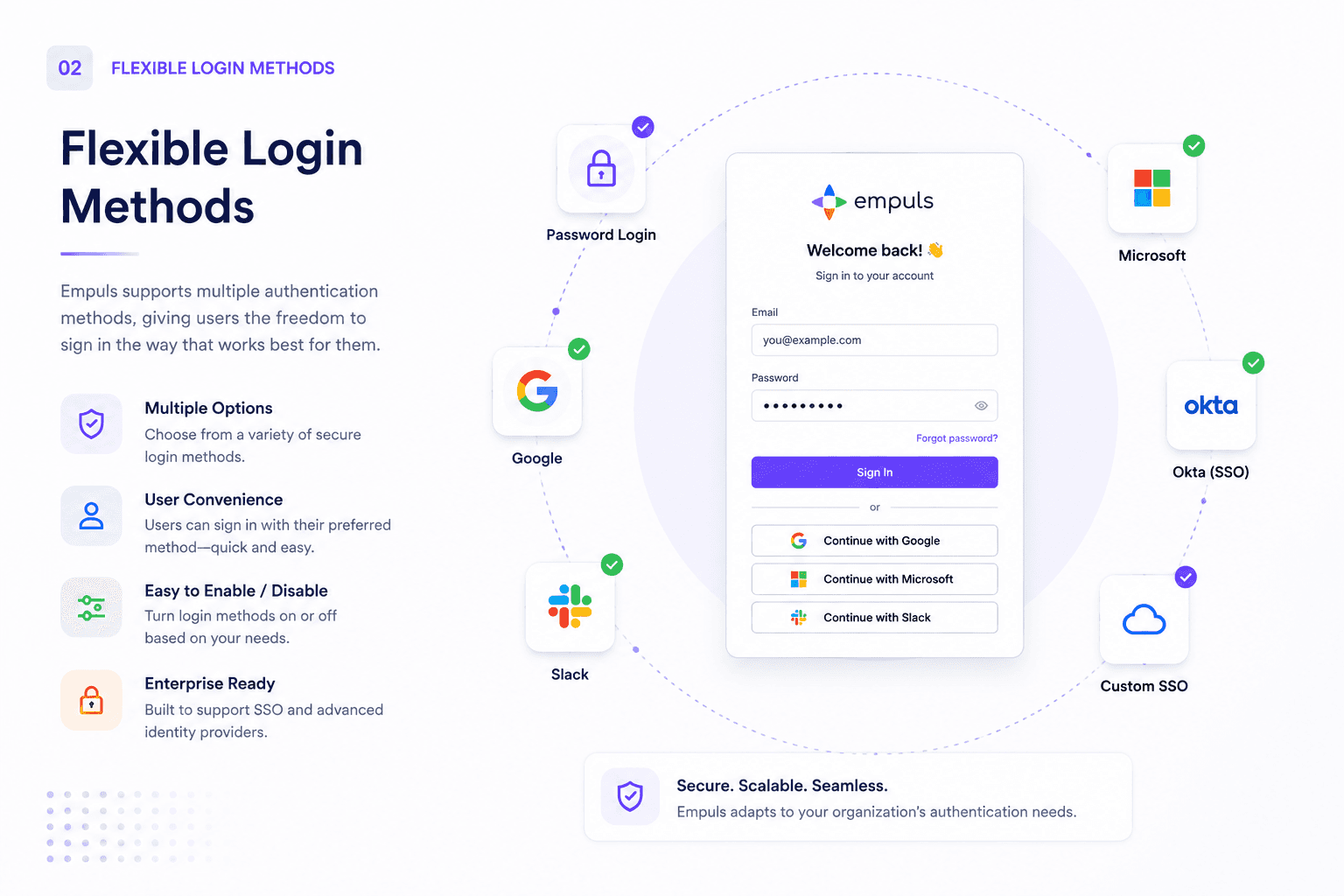
Organisations can enable authentication methods based on internal IT policies.
Supported methods include
Password Login
Google Login
Microsoft Login
Slack Login
Authentication providers can be enabled independently without engineering support.
3. Enterprise SSO Configuration
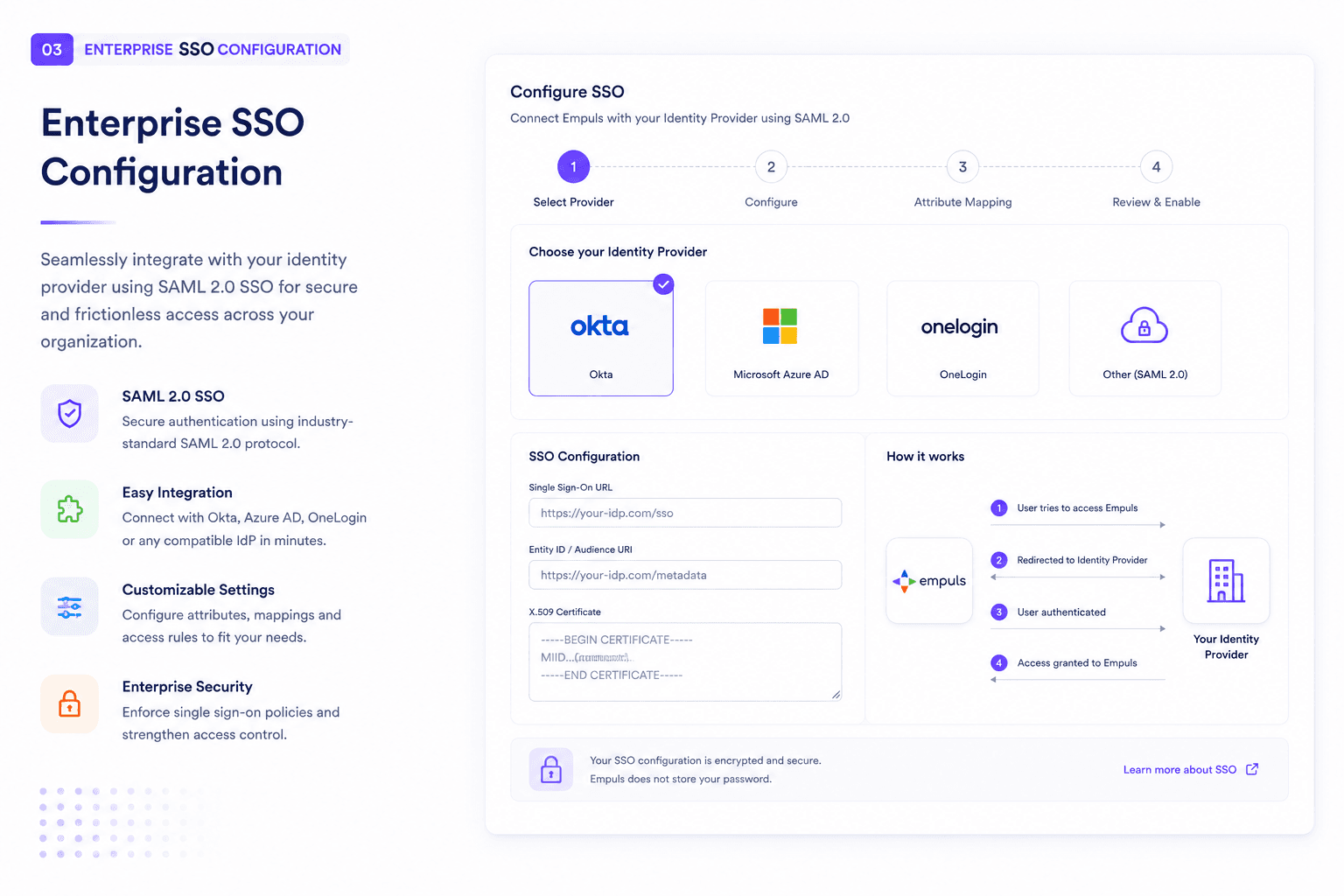
Large organisations require more advanced identity configuration.
Administrators can configure
Identity Provider URLs
Entity IDs
Certificates
Metadata
Domain Mapping
Authentication Rules
Complex enterprise configuration is broken into guided, manageable steps.
4. Adaptive Login Experience
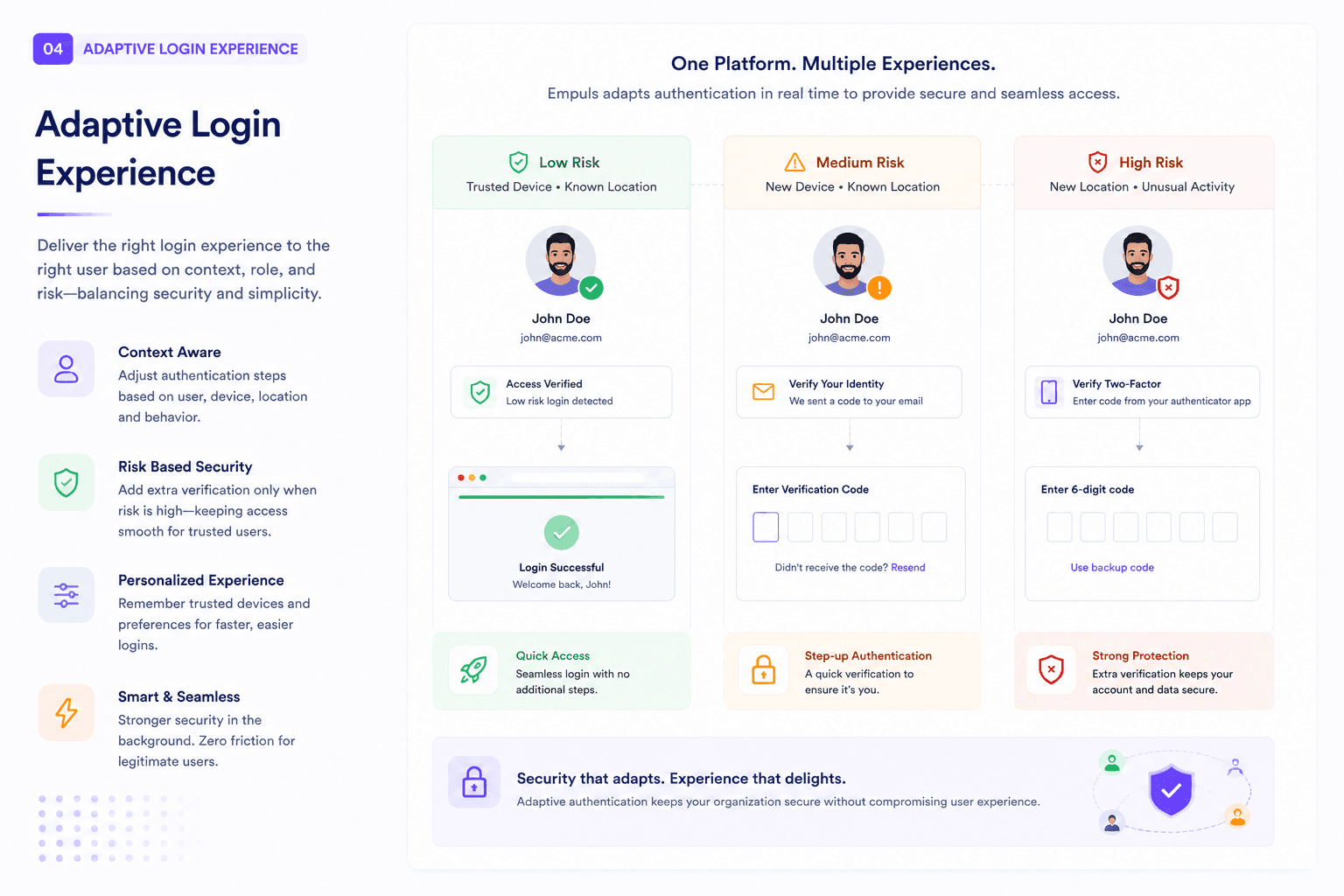
Employees only see authentication methods configured by their organisation.
The experience dynamically adapts to organisational settings.
Examples include
Password Login
Google Login
Microsoft Login
Slack Login
Enterprise Redirect
SAML Login
Every organisation receives a tailored authentication experience.
5. Verification Before Activation
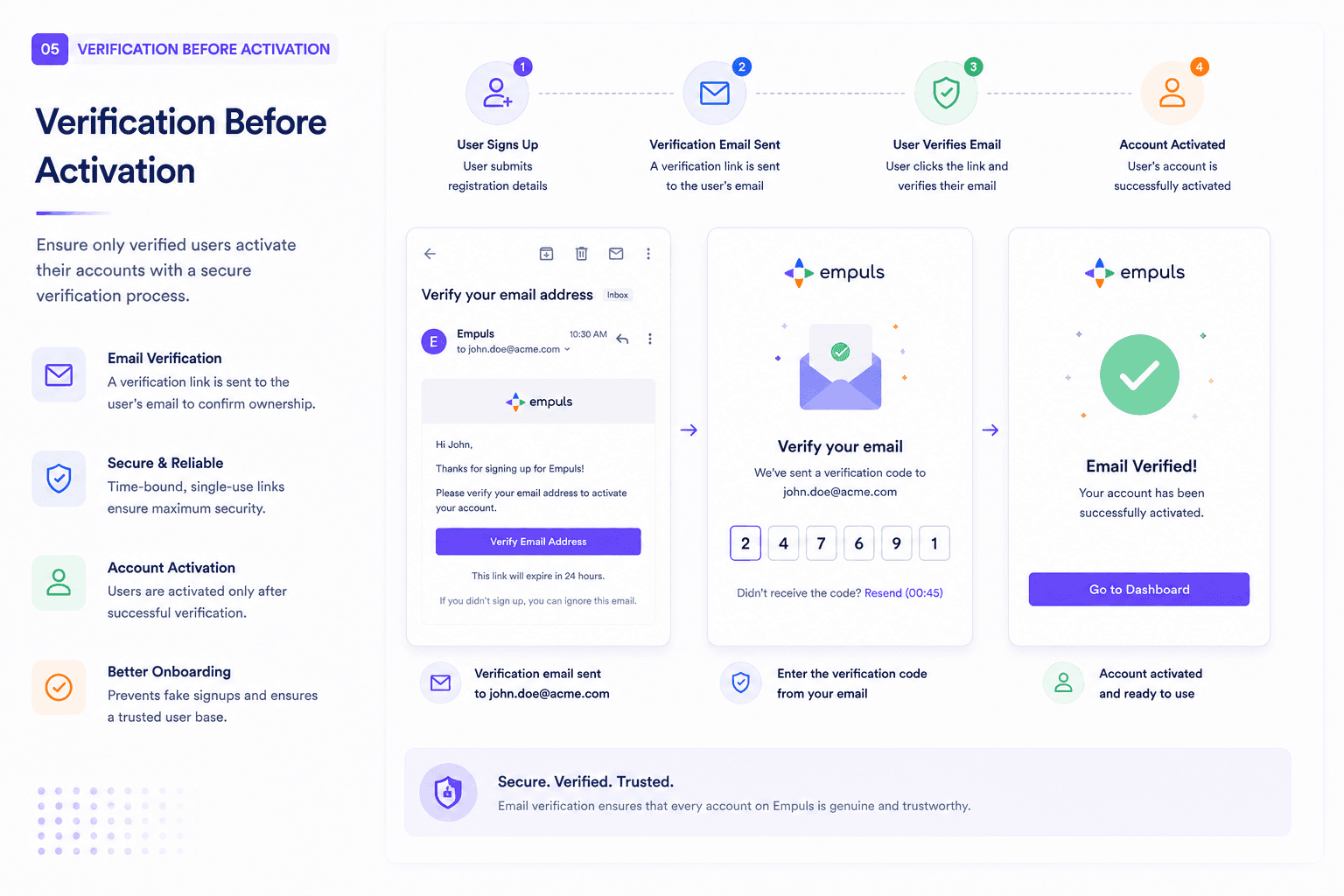
Authentication configurations are validated before deployment.
Administrators can verify setup and avoid configuration errors before enabling authentication for employees.
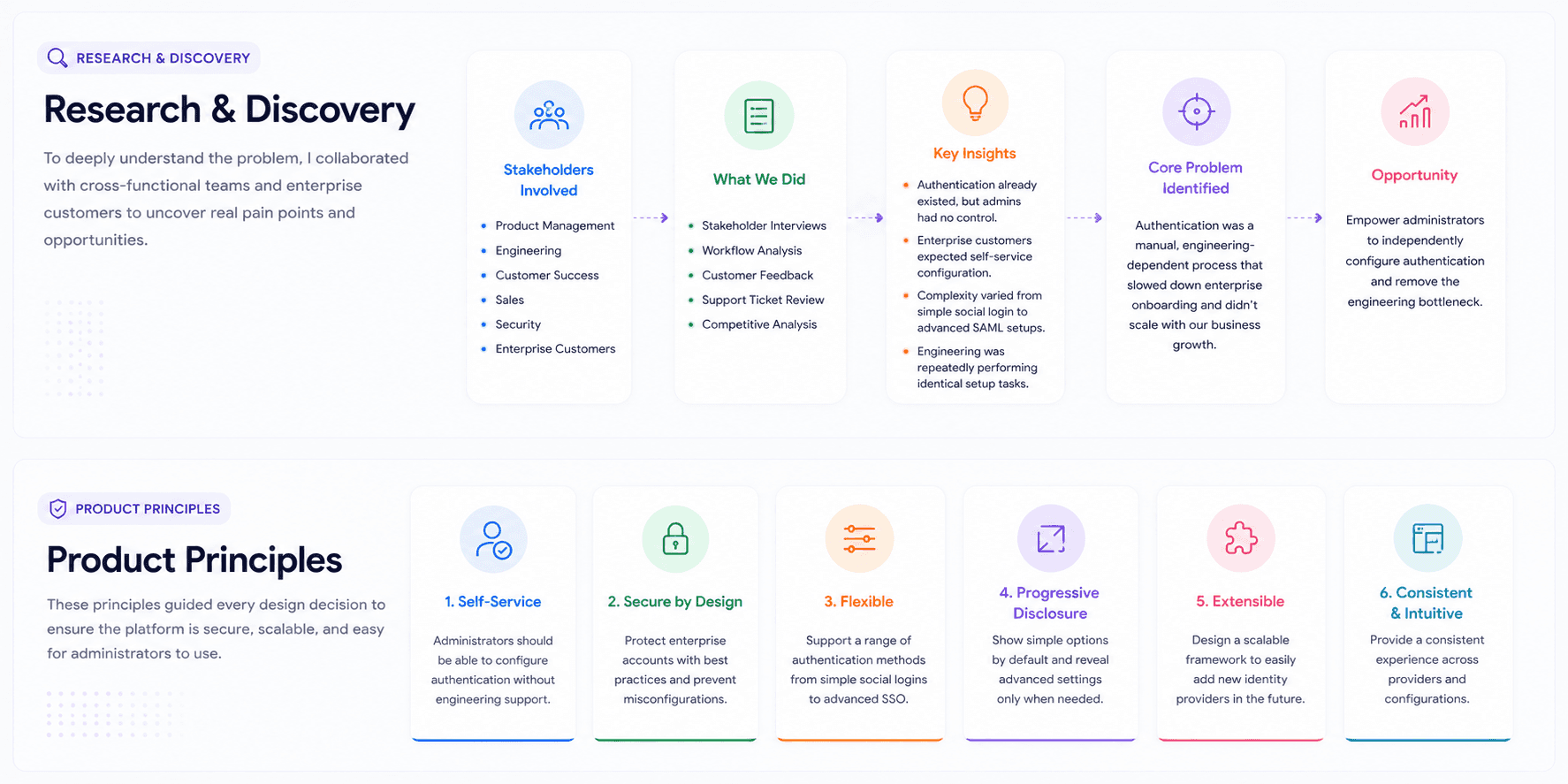
Design Decisions
Progressive Disclosure
Reduce complexity by revealing advanced options only when required.
Familiar Provider Branding
Recognisable provider logos reduce cognitive load.
Guided Enterprise Configuration
Breaking SAML setup into logical steps improves completion rates.
Consistent Interaction Patterns
Every authentication provider follows the same workflow.
Reduce Technical Complexity
Hide implementation details while exposing meaningful administrative controls.
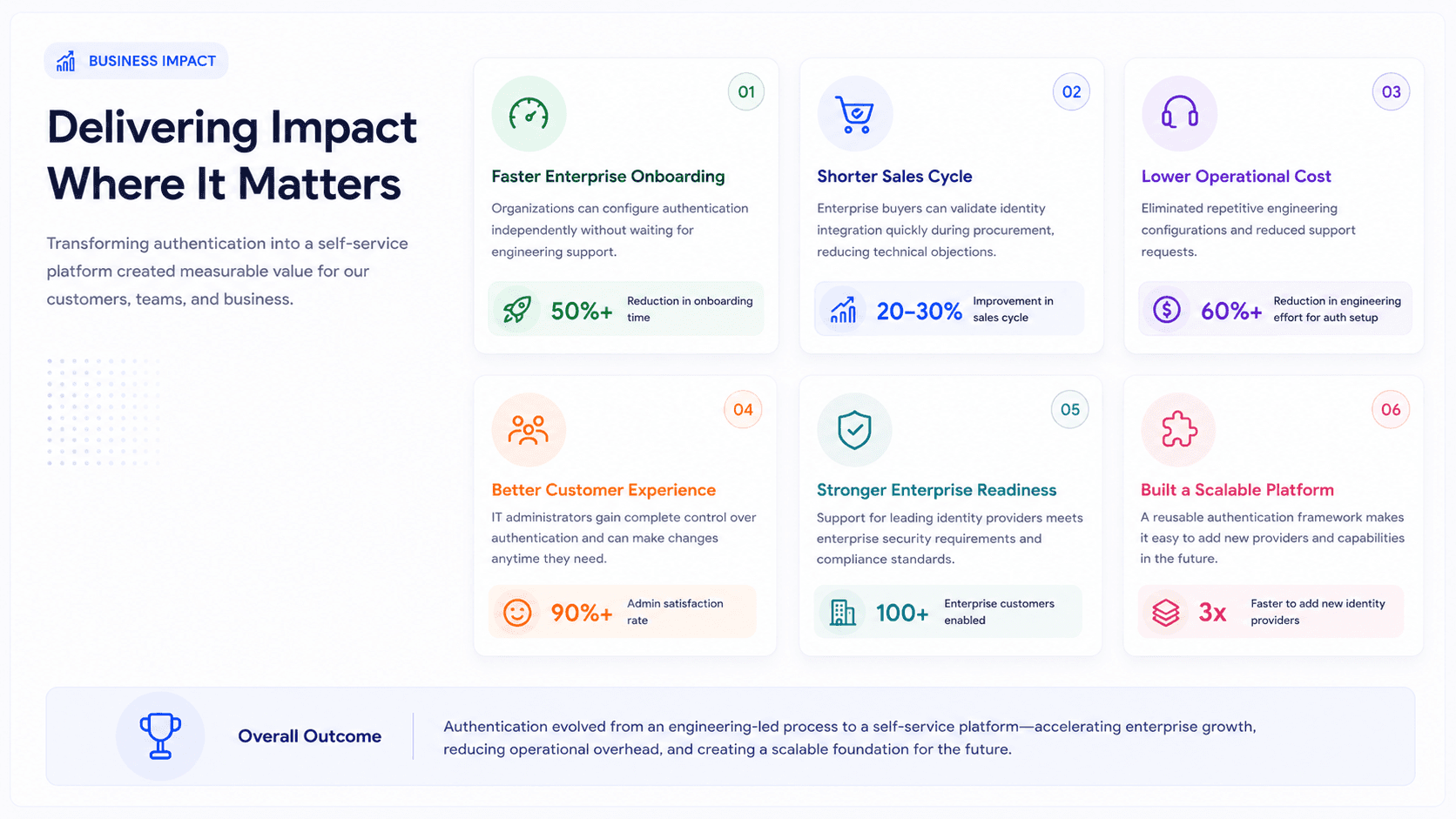
Key Takeaways
This project wasn’t about introducing another login option.
It was about removing a systemic bottleneck that affected enterprise sales, onboarding, engineering efficiency, and customer experience.
By transforming authentication from an engineering-managed process into a self-service platform, we improved enterprise readiness, reduced operational overhead, and established a scalable foundation for future identity integrations.
Reflection
One of the most valuable lessons from this project was recognising that the highest-impact product work doesn’t always result in a new end-user feature.
Sometimes, the greatest opportunity lies in identifying operational friction that limits business growth.
By rethinking authentication as a platform capability rather than an implementation task, we shifted ownership from engineering to administrators, enabling faster enterprise adoption while creating a more scalable product for the future.
Related Projects

